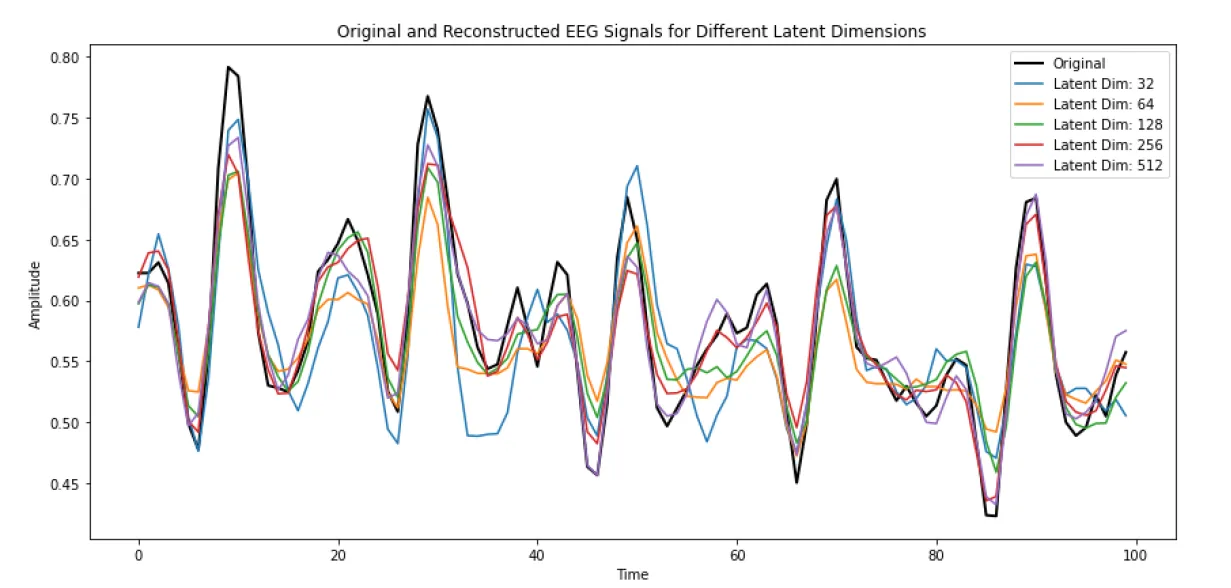
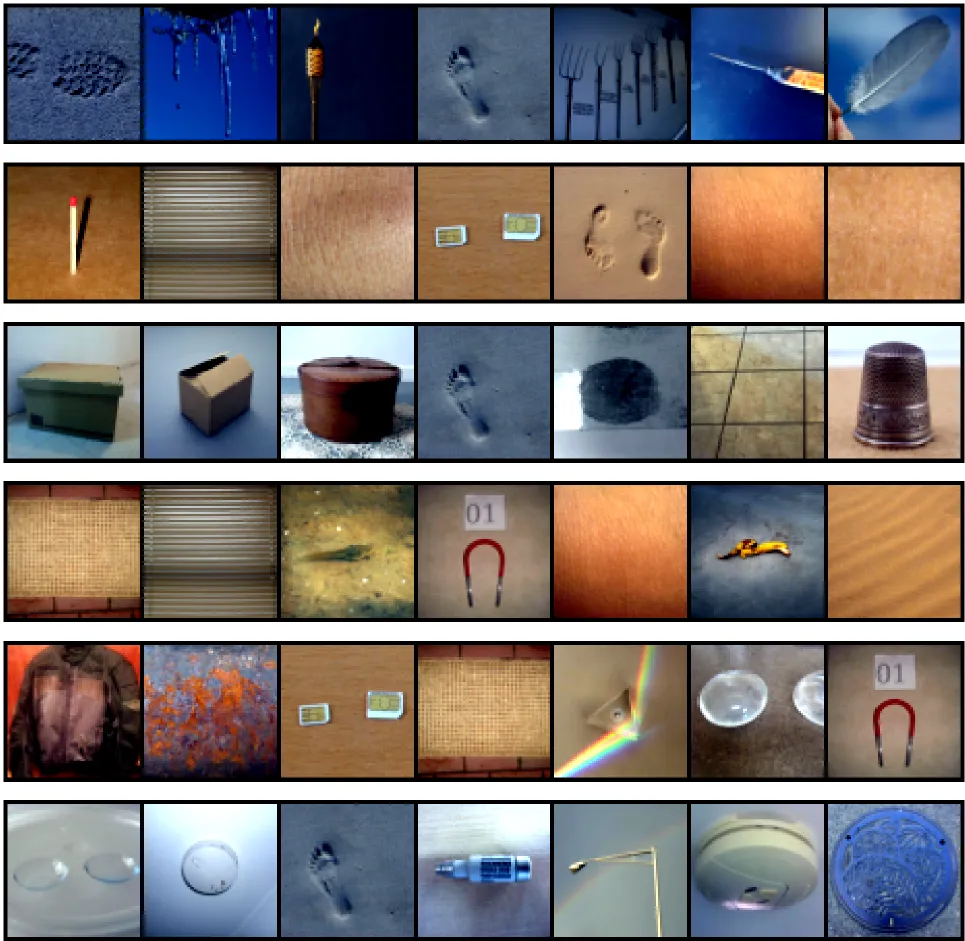
The cover shows two different tests of the representation. The trace compares an original EEG signal with autoencoder reconstructions across five latent dimensions. The image grid shows qualitative neighbourhoods in the shared concept-space experiment. Together they ask the right preliminary question: before trying to generate an image, what structure did the models preserve?
EEGVIX was my MSc research project in Artificial Intelligence and Adaptive Systems at the University of Sussex, supervised by Dr Ivor Simpson. It explored whether paired EEG recordings and images could be brought into a shared representation from which a visual stimulus could be reconstructed.
Why direct reconstruction is difficult
EEG is a noisy, low-spatial-resolution measurement of electrical activity at the scalp. The visual stimulus is separated from that signal by perception, neural dynamics, measurement noise and preprocessing. There is no clean pixel-to-signal correspondence for a model to invert.
The project therefore treated reconstruction as a representation-learning problem. An image autoencoder first learned a compact visual space. A separate one-dimensional convolutional encoder learned representations from seventeen EEG channels. During alignment, the image encoder and decoder were frozen while the EEG encoder was trained to move paired brain signals toward their image representations using distribution, distance and cosine-similarity objectives.
First establish that each modality can be compressed
Before asking two modalities to share a space, each encoder has to preserve something meaningful about its own input.
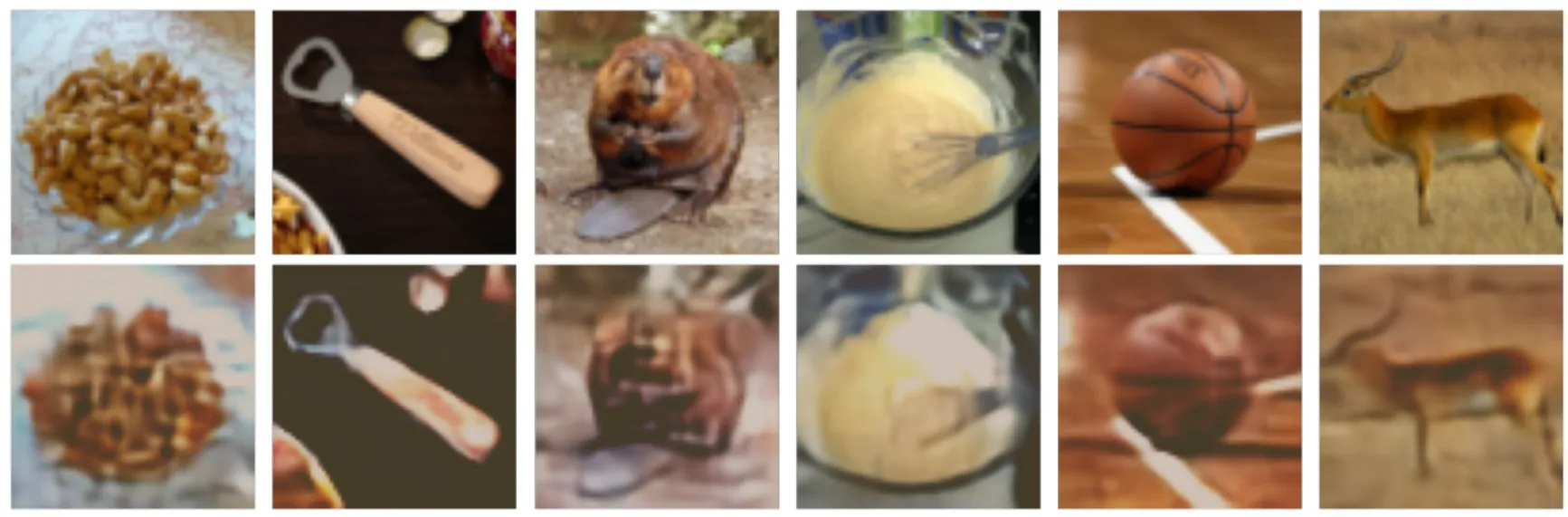
Figure 01 Image-autoencoder results. Reference images are shown above and reconstructions below. Shape and dominant colour often survive, while texture and exact object boundaries soften.
The image reconstructions show the expected bottleneck. A compact latent vector retains large visual features but discards detail. That limitation carries into any later EEG-to-image experiment: the decoder cannot recover information that its own visual representation never preserved.
For EEG, reconstruction was evaluated across several latent sizes. As the cover trace shows, broad temporal structure can be compressed and recovered, but the fit is not uniform: peaks are damped, shifted or missed. This is a reminder that a low reconstruction loss does not mean every physiologically relevant feature is retained.
A shared concept space
The alignment experiment did not force the EEG encoder to produce pixels directly. Instead, it trained the EEG representation to approach the latent representation of the paired image, then passed that vector through the frozen image decoder.
The concept-space neighbourhoods in the cover suggest that “similarity” is mixed. The representation can group images by object concept, but also by surface statistics such as colour and texture. For a neural-decoding system, that distinction matters: a reconstruction that looks broadly similar is not necessarily evidence that the model recovered the perceived object as a concept.
From aligned EEG back to an image
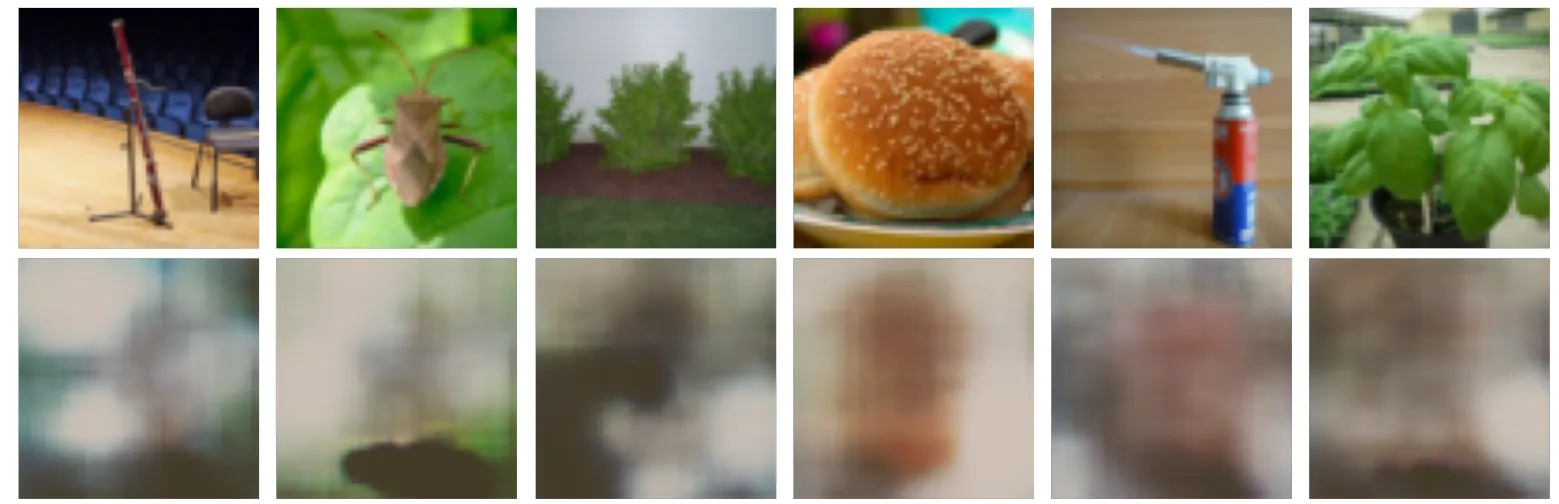
Figure 02 Reference stimuli above and aligned reconstructions below. Colour and rough composition sometimes survive, while object identity and fine structure often do not.
These outputs are recognisably imperfect. That gap is more scientifically useful than a polished claim that EEG can simply “read an image.” The model is demonstrating partial alignment between representations, not faithful recovery of a person’s visual experience.
Reading the result
The aligned reconstructions preserve enough visual signal to make the experiment interesting, but not enough to claim faithful stimulus recovery. The outputs are blurry, the evaluation shown here is largely qualitative, and the learned space inherits limitations from the image autoencoder, the EEG encoder and the paired dataset.
The repository also contains variational, joint-model and later diffusion experiments. The durable result of the dissertation, however, is methodological: separate the ability to reconstruct each modality from the harder claim that the modalities have been meaningfully aligned.
The project uses the public EEG visual-stimulus dataset described in NeuroImage (2022), and the full experimental pipeline is available in the repository.
The interesting question is not whether a model can draw something, but which properties of a visual experience genuinely survived the journey through brain, electrode and latent space.